
Warts are non-cancerous, rough growths on the skin. In most cases, a pathogen known as the human papillomavirus (HPV) is the primary cause of warts.
Types of Warts
In America, 14 million people contract HPV every year. However, the development of warts from this virus depends on the immune system of the infected individual.
Therefore, people who have the highest chances of getting warts are those with a weak immune system due to a pre-existing infection.
Generally speaking, there are five main types of warts. Each type appears on a different part of the body and also has different characteristics. The types are as follows:
- Common warts – Common warts tend to grow on the fingers of the hands and toes, but they can also occur on the elbows and knees. They have a rough texture, are hard, and are painless to the touch. They can be transmitted by touch.
- Plantar warts – Plantar warts occur on the soles of the feet. They can be painful because they grow deep into the skin. Walking can be painful if these warts grow on the part of the sole that bears weight.
- Flat warts – Small, flat warts tend to grow on the face, thighs, and hands.
- Filiform warts – These warts occur around the mouth and nose, and in some cases can be found under the chin and on the neck.
- Periungual warts – Periungual warts can appear around toenails or under the nail itself. These warts can disrupt nail growth and often cause pain.
Best Natural Remedies
Warts can be painful, and furthermore, people are often embarrassed to have them. Fortunately, you can treat them with simple, non-invasive yet effective natural methods.
Apple cider vinegar – Apple cider vinegar has antiviral properties that help eliminate HPV. Soak a little cotton in apple cider vinegar and place it on the wart. Then secure the cotton with a bandage and leave it overnight. Remove it in the morning and allow the skin to breathe for a while before repeating the process.
Banana peel – The proteolytic enzyme in the banana peel helps soften hard warts, and over time can dissolve them completely. Before placing the banana peel on the skin, remove the white layer of the peel, as this enzyme is only present in the yellow part.
Coconut oil – Coconut oil has antibacterial, antiviral, and antifungal effects. Apply it in the same way as apple cider vinegar.
Honey – Warts are harder to remove if the skin is moist. Honey contains enzymes that draw excess moisture out of the skin.
Plant sap (milk) – The sap that oozes from plants when the stem is broken helps remove warts. Well-known plants that release sap include dandelion and spurge.
Aloe vera – Aloe vera's mild and soothing gel helps with painful warts. The gel will remove them by drying the warts out.
Comfrey leaf – Comfrey is most commonly used in wound healing. To remove a wart, boil comfrey leaves and let them cool. Pour the cooled water with the leaves into a basin and soak your feet. Keep your feet in the water for as long as possible.
Turmeric – Turmeric has powerful antimicrobial effects. Mix turmeric with water to make a thick paste that you can apply to the warts.
Garlic – Garlic has antimicrobial and antiviral effects. Place a thinly sliced piece of a garlic clove on the wart and secure it with a bandage or adhesive plaster. A blister will form on the wart. Once the blister dries, the wart will fall off. Garlic must not touch healthy skin, only the surface of the wart.
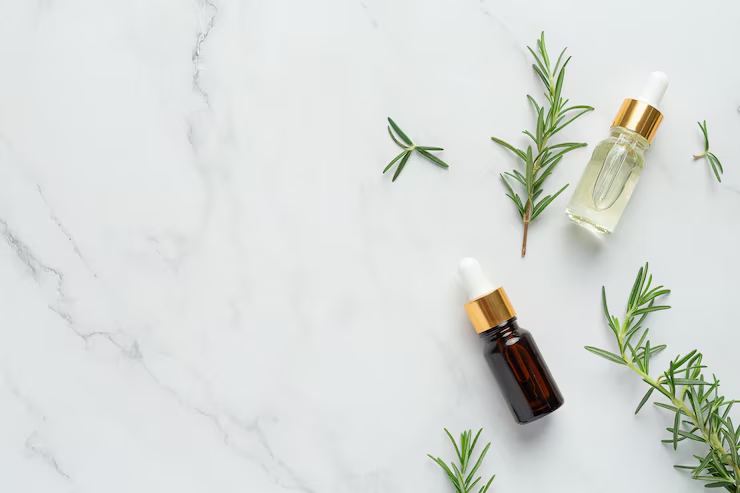
Essential oils – Many essential oils contain active plant ingredients that kill pathogens. The best oils for warts are rosemary oil and hazelnut oil. You apply the oil by putting a few drops on a piece of cotton, which you secure overnight to the area of skin where the wart is located.